
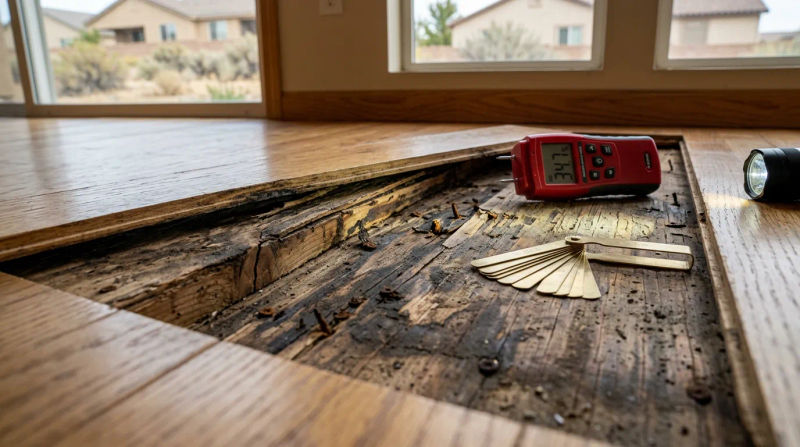
You walk across the living room to grab a blanket as the evening cools, and you hear it - a new squeak near the window. Or maybe you notice a slight give, a sponginess underfoot in the hallway that wasn't there last summer. As the seasons change here in Sparks and the nights get colder, our homes respond. The extremely dry air and significant indoor humidity swings can cause building materials to expand and contract, often revealing underlying issues that were previously hidden. That new noise or soft spot isn't just an annoyance; it could be one of the first subfloor damage signs telling you there’s a problem brewing beneath your beautiful floors.
As a technician who has worked on homes across the Truckee Meadows for over a decade, I've seen how these subtle clues can point to significant issues. Your home's subfloor is the foundation for your finish flooring - be it laminate, hardwood, vinyl, or carpet. When it’s compromised, the problem only gets worse over time. Paying attention to these early warnings is key to preventing a small repair from becoming a major project.
Common Signs and Symptoms
Your flooring can communicate a lot about the health of the structure beneath it. Our crews are trained to look and listen for these specific indicators during an assessment. Here are some of the most common signs that your subfloor may be failing.
- Persistent Squeaks and Creaks: While some minor noise is normal, loud or worsening squeaks are a red flag. This is often one of the primary squeaky floor causes Sparks NV homeowners report. The noise isn't usually the floorboards themselves, but the subfloor material (plywood or OSB) rubbing against a loose nail or a floor joist. This movement can be caused by the wood drying out and shrinking, or by fasteners that have loosened over time.
- Soft or Spongy Spots: If you step on an area and it feels like it has more give or bounce than the surrounding floor, you've found a soft spot. This is especially noticeable and concerning with soft spots under laminate floor or other floating floors. This sponginess indicates the subfloor has lost its structural integrity in that area, often due to moisture, and is no longer providing a solid base.
- Uneven or Sloping Floors: Do you notice a visible dip or a slope in a room? While it could be related to the foundation, it can also be a sign of failing floor joists or a severely damaged subfloor that has begun to sag. You might notice furniture leaning slightly or a ball rolling to one side of the room.
- Gaps Between Flooring Planks: If you see gaps widening between your hardwood or laminate planks, or a space opening up between your flooring and the baseboards, it’s a sign of movement. A compromised subfloor can shift or flex, causing the finish flooring on top to separate.
- Musty Odors: A persistent, earthy, or musty smell that you can't trace to anything else is one of the classic subfloor moisture symptoms. This odor is caused by mold and mildew growing in the dark, damp space within your floor system. You don't need to see it to know it's there; your nose is often the first to know.
- Bouncy or Deflecting Floors: Does the floor seem to bounce when you walk across it? Do glasses in a cabinet rattle? Excessive deflection means the subfloor and joist system isn't stiff enough. This can be an original construction issue or a sign that the materials have weakened over time.
- Popping or Crackling Sounds: Different from a squeak, these sharp sounds often occur with floating floors. They can happen when the floor moves over an uneven subfloor. The locking mechanisms of the planks engage and disengage as you walk, creating a distinct crackle. The dry Sparks climate can exacerbate this as materials shrink.
What Causes This Problem
Understanding what leads to subfloor failure is crucial for finding a lasting solution. It’s rarely just one thing; often, it's a combination of factors. Our diagnostic process always focuses on identifying the root cause, not just treating the symptom.
Moisture is the #1 Culprit: Water is the archenemy of wood subfloors. Even small amounts of moisture over a long period can cause plywood or OSB to delaminate, swell, and rot. Common sources include:
- Slow plumbing leaks from toilets, showers, or pipes in the wall.
- Appliance failures (dishwasher, washing machine, refrigerator ice line).
- Improperly sealed windows or doors allowing rain to get in.
- High humidity in a crawl space due to poor ventilation.
Age and Construction Methods: Many homes in the Sparks area, particularly in neighborhoods like Sun Valley, date back to the 1950s and 1960s. These mid-century homes were built efficiently, but materials and techniques have evolved. Some may have plank subflooring instead of modern plywood or OSB, which is more prone to developing gaps and squeaks as it ages. Over 60+ years, fasteners can work loose and the wood itself can become brittle, especially with our region's dry climate.
Improper Flooring Installation: A beautiful new floor can hide a multitude of sins. If a previous installer laid new flooring over a damaged or uneven subfloor without proper preparation, the problems will eventually telegraph through to the surface. A proper installation requires a flat, clean, and structurally sound subfloor. Skipping this crucial prep work is a leading cause of premature flooring failure.
Pest Infestations: Termites, carpenter ants, and powderpost beetles can cause devastating damage to your home’s wooden structure, including the subfloor and the joists that support it. This damage can happen silently over years, completely compromising the floor's integrity from below.
Structural Issues: Sometimes, the problem isn’t the subfloor itself, but the foundation supporting it. Settling foundations, cracked support piers in a crawlspace, or undersized floor joists can all lead to the symptoms we've discussed, like sloping and bounciness.
When to Call a Professional
Some homeowners are comfortable with DIY repairs, but subfloor issues are rarely a simple fix. Addressing the symptom without fixing the cause - for example, shimming a squeak without addressing the moisture that caused the wood to shrink - is a temporary solution at best.
You should contact a qualified professional if you notice:
- Any soft spots under laminate floor or other flooring types. This almost always requires removing the finish flooring to inspect and replace the damaged subfloor panel.
- Any subfloor moisture symptoms, such as musty smells or visible water staining. A professional needs to identify and stop the source of the water before any repairs can be made.
- Widespread or progressively worsening squeaks, pops, or bounces.
- Visible sagging, sloping, or gaps appearing in your flooring.
An experienced handyman professional has the right tools and knowledge to do a thorough investigation. Our technicians use moisture meters, laser levels, and boroscopes to see inside walls and floors without excessive demolition. This allows us to accurately diagnose the extent of the damage and create a precise plan for repair, ensuring the work is done correctly and to code.
Conclusion
Your floors are one of the most used and abused surfaces in your home. Paying attention to the subtle signs they provide is the best way to protect your investment and maintain a safe, solid home. Squeaks, soft spots, and strange odors are more than minor annoyances; they are important subfloor damage signs that shouldn't be ignored.
Especially as we move into the fall and winter here in Sparks, these issues can become more pronounced. Taking action now, during the milder September weather, is far easier than dealing with a major failure in the middle of winter. Don't wait for a small problem to grow.
If you notice any of these signs, contact a local Handyman professional for an inspection. A thorough evaluation can give you peace of mind and a clear path forward to restoring the safety and stability of your home's floors.