

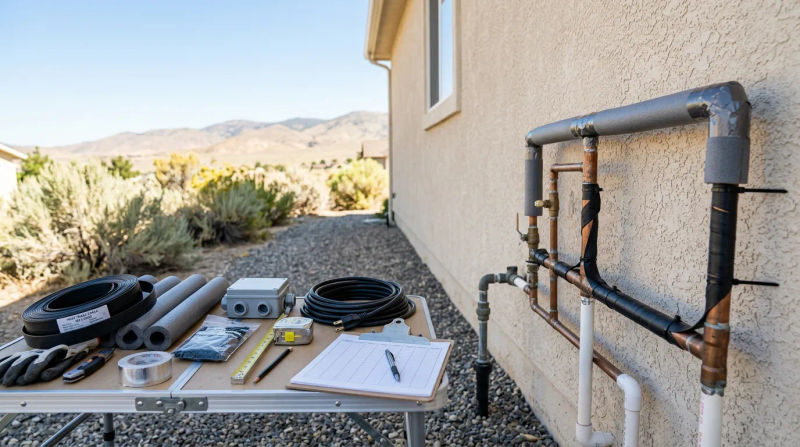
As a Senior Technician with over a decade of experience in Sparks and the Truckee Meadows, I know that when the calendar flips to September, savvy homeowners start thinking about one thing: winter preparation. Before the first cold snap hits our mountain region, the most common question I hear is, "What's it going to cost to protect my pipes from freezing?" It's a critical question, and one that deserves a transparent answer. The cost of preventing a burst pipe is always a fraction of the cost of repairing one and dealing with the subsequent water damage.
This guide is designed to give you a clear, honest look at the costs associated with pipe insulation and heat tape installation. We'll break down the numbers, explore what drives prices up or down, and empower you with the right questions to ask any contractor. My goal is to help you make an informed decision and budget effectively before the snow flies.
Average Costs in Sparks, NV
When we provide estimates, we aim for clarity. Costs are typically broken down by the type of protection and the labor involved. Here are some realistic price ranges you can expect for professional freeze protection services in the Sparks area.
- Professional Pipe Insulation: For standard foam or rubber insulation on accessible pipes (like those in an open garage or an easy-to-access crawl space), the pipe insulation cost in Sparks, NV typically ranges from $6 to $12 per linear foot. This price includes the material and the labor to precisely cut, fit, and secure the insulation around the pipes and any fittings. For a typical 20-30 foot run of exposed pipe, you might budget between $180 and $360 for insulation alone.
- Heat Tape (Heat Cable) Installation: This is a more involved task because it includes an electrical component. The heat tape installation cost can vary significantly based on the project's complexity.
- Simple Project: For a short, straight run of pipe (15-25 feet) in a garage with a GFCI-protected outlet already nearby, you could expect to pay between $350 and $600. This includes the professional-grade, self-regulating heat cable, installation, and insulation.
- Complex Project: A more complex job could involve longer runs, multiple pipes, difficult access in a crawl space or attic, and the need to install a new, dedicated GFCI outlet. In these cases, the price could range from $800 to $1,500 or more. The heat cable install labor cost in Nevada is a major factor here, as difficult access or electrical work requires more time from a skilled technician.
The average freeze protection for garage pipes price, combining both heat tape and new insulation for a standard two-car garage with vulnerable plumbing, often falls in the $500 to $950 range.
Factors That Affect Price
No two homes are exactly alike, which is why a one-size-fits-all price doesn't exist. Several key factors influence the final cost of your freeze protection project.
- Accessibility of Pipes: This is the single biggest variable. Are the pipes located in an open, unfinished garage with plenty of room to work? Or are they tucked away in a tight crawl space, behind drywall, or in a ceiling cavity? The more difficult it is for our technicians to access the pipes, the more labor time is required.
- Length and Complexity of Pipe Runs: A simple, straight 10-foot pipe is much quicker to service than a 50-foot run with numerous 90-degree bends, T-fittings, and valves. Each fitting requires meticulous cutting and sealing for both insulation and heat tape to be effective.
- Electrical Requirements: Heat tape must be plugged into a Ground-Fault Circuit Interrupter (GFCI) outlet for safety. If a code-compliant outlet isn't within reach of the heat tape's termination point, one must be installed. This adds the cost of materials (outlet, box, wiring) and the labor of a qualified technician to run the new circuit safely.
- Building Era and Design: I've worked on countless homes in the Spanish Springs area built during the boom of the 1990s and 2000s. These homes often feature large, attached garages with laundry rooms or powder rooms adjacent. To create those open floor plans, builders sometimes routed plumbing through exterior garage walls or in the uninsulated space between the garage ceiling and the floor above. Protecting these vulnerable pipes is crucial, but accessing them can sometimes require more planning and labor.
- Type of Materials:
- Heat Tape: We strongly recommend self-regulating heat tape. It automatically adjusts its heat output based on the ambient temperature, making it more energy-efficient and safer than older, constant-wattage cables. It costs more upfront but provides better performance and long-term savings on your utility bill.
- Insulation: Basic foam sleeves are economical, but closed-cell rubber insulation offers a higher R-value (insulating power) and better durability. We can help you choose the right material for your specific situation and budget.
How to Get the Best Value
Getting the best value isn't just about finding the lowest price; it's about getting a durable, effective solution that gives you peace of mind. Here are a few tips from my years in the field.
- Schedule in the Off-Season: The best time to address freeze protection is in late summer or early fall. Don't wait for the first freeze warning! When temperatures plummet, our phones ring off the hook with emergency calls. Scheduling ahead not only prevents a potential disaster but also ensures you get on the schedule at a time that is convenient for you, without the premium for an emergency visit.
- Bundle Your Projects: Do you have a few other small repairs on your to-do list? Perhaps a sticky door, a small drywall patch, or a finicky light fixture? By grouping several tasks into one visit, you can save significantly on trip charges and make the most of a technician's time on-site.
- Prepare the Work Area: A simple way to reduce labor time is to ensure our crew has clear and easy access to the work area. If pipes are in the garage, moving stored items, vehicles, or equipment out of the way before we arrive allows us to get straight to work.
- Invest in Quality: Opting for the cheapest materials or an inexperienced installer can lead to failure when you need protection the most. Professional installation ensures the heat tape is secured correctly (never with zip ties, which can damage the cable) and that the insulation is properly sealed to prevent moisture intrusion.
Questions to Ask Your Contractor
Before hiring anyone, make sure you feel confident in their expertise and process. Here are some important questions to ask:
- What type of heat cable do you use and why? (Look for an answer that includes "self-regulating.")
- Does your estimate include the installation of a new GFCI outlet if needed?
- Can you provide proof of liability insurance and licensing?
- How will you attach the heat tape to the pipe? (The correct answer involves high-temperature electrical tape or specific manufacturer clips.)
- What is the warranty on the materials you use and on your workmanship?
- Will you provide a detailed, written estimate that breaks down the costs of labor and materials?
Protecting your home's plumbing from our harsh Nevada winters is a smart investment. It prevents the headache and massive expense of frozen pipe emergencies. While some simple insulation jobs can be a DIY project, the combination of heat tape and electrical work is best left to trained professionals who understand the materials and local codes.
For a personalized estimate for your home in Sparks, contact Joe The Handyman for a free consultation. Our experienced technicians can assess your specific needs and provide a clear, detailed quote to ensure your home is ready for whatever winter brings.