

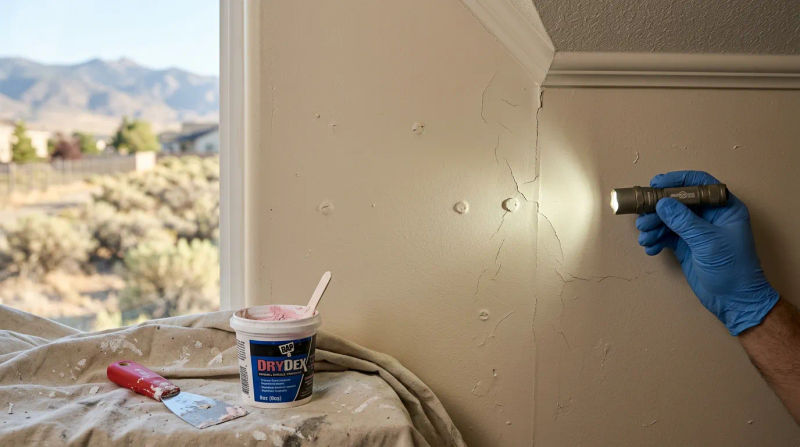
As a Senior Technician with over a decade of experience in home repair here in the Truckee Meadows, I've seen a familiar pattern emerge every September. As the warm summer days give way to crisp, cool nights, homeowners start noticing little imperfections on their walls and ceilings that seemingly appeared out of nowhere. It often starts with a small, round bump on a perfectly smooth wall or a faint, hairline crack spidering out from a window frame. If this sounds familiar, you're not imagining things. These are classic signs of your home responding to the dramatic temperature shifts common to our high-desert climate.
These seemingly minor issues, often called nail pops, are more than just cosmetic blemishes. They are signals from your home's structure, and paying attention to them in the fall can prevent more significant, and costly, repairs down the road. Let's diagnose what you're seeing and what it means for your property.
Common Signs and Symptoms
When our technicians are called out for an interior wall issue, especially during the fall and spring, we look for a specific set of symptoms. These signs indicate that the home's framing is moving, and the drywall is showing the stress. Here’s what to look for on your interior walls and ceilings:
- Small, Circular Bumps: This is the most common sign of a nail or screw pop. It looks like a small, raised circle, about the size of a dime, pushing the paint outward. You might be able to feel it more easily than you can see it at first.
- Cracked Paint Over Bumps: If left alone, the paint over the bump will eventually crack, sometimes revealing the metal fastener head underneath.
- Visible Fastener Heads: In more advanced cases, the head of the drywall screw or nail will be fully visible, having broken through the paint and joint compound completely.
- Hairline Cracks: Pay close attention to the areas around door and window frames, as well as the corners where walls meet ceilings. Temperature swing nail pops are often accompanied by thin, vertical or horizontal cracks as the structure shifts.
- Lifting or Bubbling Drywall Tape: Look at the seams where two sheets of drywall meet. If the paper or mesh tape used to cover that joint is bubbling, peeling, or has a long, straight crack running along its edge, it's a sign of movement in the underlying structure.
These issues are particularly common in the large, open-plan living areas and rooms with vaulted ceilings that characterize many homes built in the Sparks area during the 1990s and 2000s. The long, uninterrupted spans of drywall in these designs are more susceptible to showing stress from structural movement.
What Causes This Problem
Understanding the root cause of these blemishes is key to a lasting fix. It’s not about bad drywall or poor paint; it’s about physics and the materials used to build your home. The primary culprit is the natural movement of the wood framing that makes up your walls and ceilings.
Wood is a hygroscopic material, meaning it absorbs and releases moisture from the air, causing it to expand and contract. It also expands and contracts with temperature changes - a process called thermal cycling. Here in Sparks, NV, we experience significant diurnal temperature swings, where a warm, sunny September day can be followed by a night that dips close to freezing. This causes the wood studs and joists in your home to shrink and swell daily.
Here’s the step-by-step breakdown:
- Installation: Drywall is attached directly to the wood framing with nails or screws.
- Contraction: When the wood stud gets cold or dries out, it shrinks slightly. The drywall, however, is more dimensionally stable and doesn't move as much. The fastener, embedded in the wood, pulls back with the stud, but the drywall sheet stays put.
- The "Pop": This slight separation can push the fastener head outward, creating the "pop" against the back of the drywall. Over many cycles, the head of the nail or screw works its way through the thin layer of joint compound, creating the visible bump.
This is why we see a spike in calls for drywall nail pops Sparks NV in the fall. The transition from summer to winter creates the most dramatic temperature and humidity swings. What starts as a minor pop now can be a sign of future problems. As we head into winter, those small cracks can become pathways for moisture, leading to more severe freeze-thaw drywall cracks when any trapped condensation expands upon freezing, widening the gap.
For homes in neighborhoods like Lemmon Valley, which saw significant development in the 1990s and 2000s, this can be a recurring issue. The lumber used during that building boom was often younger, "greener" wood that was more prone to shrinking and settling in its first few years. Combined with the complex rooflines popular in that era, which create more points of structural stress, these homes are prime candidates for seasonal drywall issues.
When to Call a Professional
Seeing a few nail pops can tempt a homeowner to try a quick DIY fix. While a single, isolated pop can be a manageable weekend project, it's important to understand when a professional approach is necessary for a durable and invisible repair.
Consider a DIY repair if:
- You have one or two isolated pops in an inconspicuous area.
- You have experience with drywall work and own the right tools (drywall knives, mud pan, sanding block, primer).
- You understand that a proper nail pops repair is a multi-day process involving setting the nail, applying multiple thin coats of compound (with drying time in between), sanding smooth, priming, and painting.
A common DIY mistake is simply spackling over the bump. This fails to address the loose fastener and the pop will almost certainly return. The fastener must be either removed and replaced or driven deeper into the stud before patching.
It's time to call an experienced professional when:
- The problem is widespread. If you have dozens of pops across multiple rooms or ceilings, it's a sign of systemic movement. A professional crew can address this efficiently and consistently.
- The pops are recurring. If you've patched a spot before and it has returned, the initial repair was likely done incorrectly or there's excessive movement that needs a more robust solution.
- You see accompanying damage. Large cracks (wider than 1/8 inch), significant drywall tape separation, or any signs of water staining indicate a potentially more serious issue that requires an expert diagnosis.
- You want a flawless finish. Achieving a perfectly smooth, invisible patch that blends with the existing wall texture requires skill and practice. Our technicians follow a standardized process to ensure the repair is undetectable once painted.
- You don't have the time or patience. A professional handyman service has the organized workflow and trained crews to complete the job quickly and cleanly, minimizing disruption to your home.
Conclusion
Those small bumps and fine cracks on your walls are more than just cosmetic annoyances; they are your home's way of communicating. They tell a story of seasonal change, of wood and drywall reacting to the unique mountain climate of Sparks. While temperature swing nail pops are rarely a sign of a serious structural emergency, they shouldn't be ignored.
Addressing them in the fall is a proactive step. A proper nail pops repair not only restores the beauty of your walls but also seals up potential pathways for moisture and prevents small issues from becoming larger freeze-thaw drywall cracks during the harsh winter months. By understanding the cause, you can ensure the right repair is made, whether it's a small DIY task or a job for a skilled team.
If you notice any of these signs appearing in your home, don't wait for them to get worse. Contact a local Handyman professional for an inspection and to discuss your options for a lasting repair.